
What happens when historical women don't fit contemporary feminist values? The case of Coba Ritsema
It would be easy to only tell you about women like Aletta Jacobs — women who fought, who marched, who left behind clear-cut testaments and philosophies that we can easily relate to. But history is messier than that, and its checkered with characters that are not straightforward models.
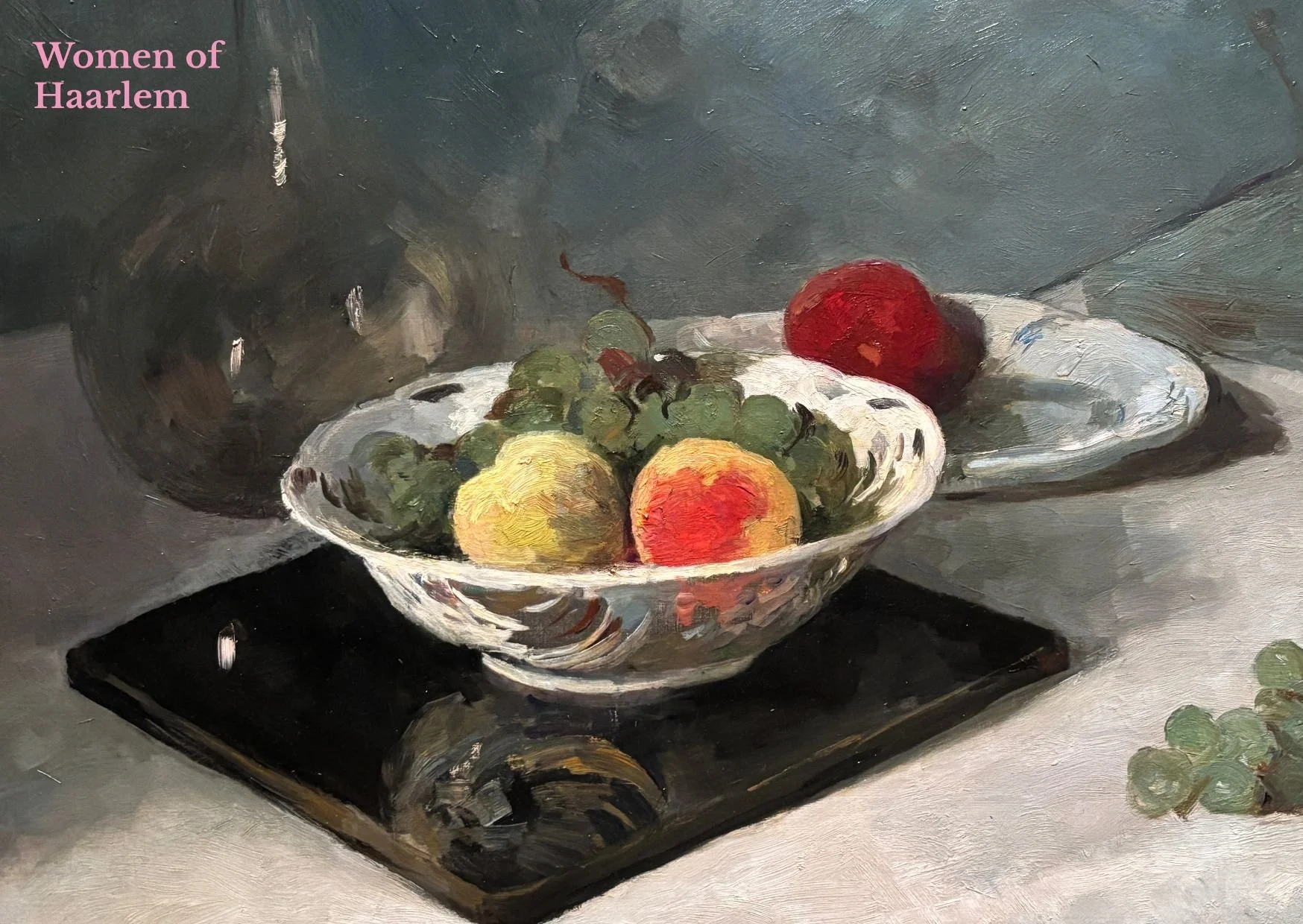
Ritsema was born in Haarlem in 1876, the daughter of a book printer, into a family that already had painters scattered through its branches — her grandfather dabbled, her father worked as a lithographer, and a cousin of her mother's was a working etcher. Her brother, Jacob, was first trained as printer but then became a painter, too. She trained at the Rijksacademie in Amsterdam, in the "women's class" taught by August Allebé. And she was good — good enough that when she asked two of the most respected painters of her generation, Thérèse Schwartze and George Hendrik Breitner, to take her on as a student, they both said no. Not because she lacked talent, but because Schwartze told her, after visiting her studio twice, that she was already good enough to continue on her own. Her classmates recalled that she was by far the most talented pupil of the bunch.
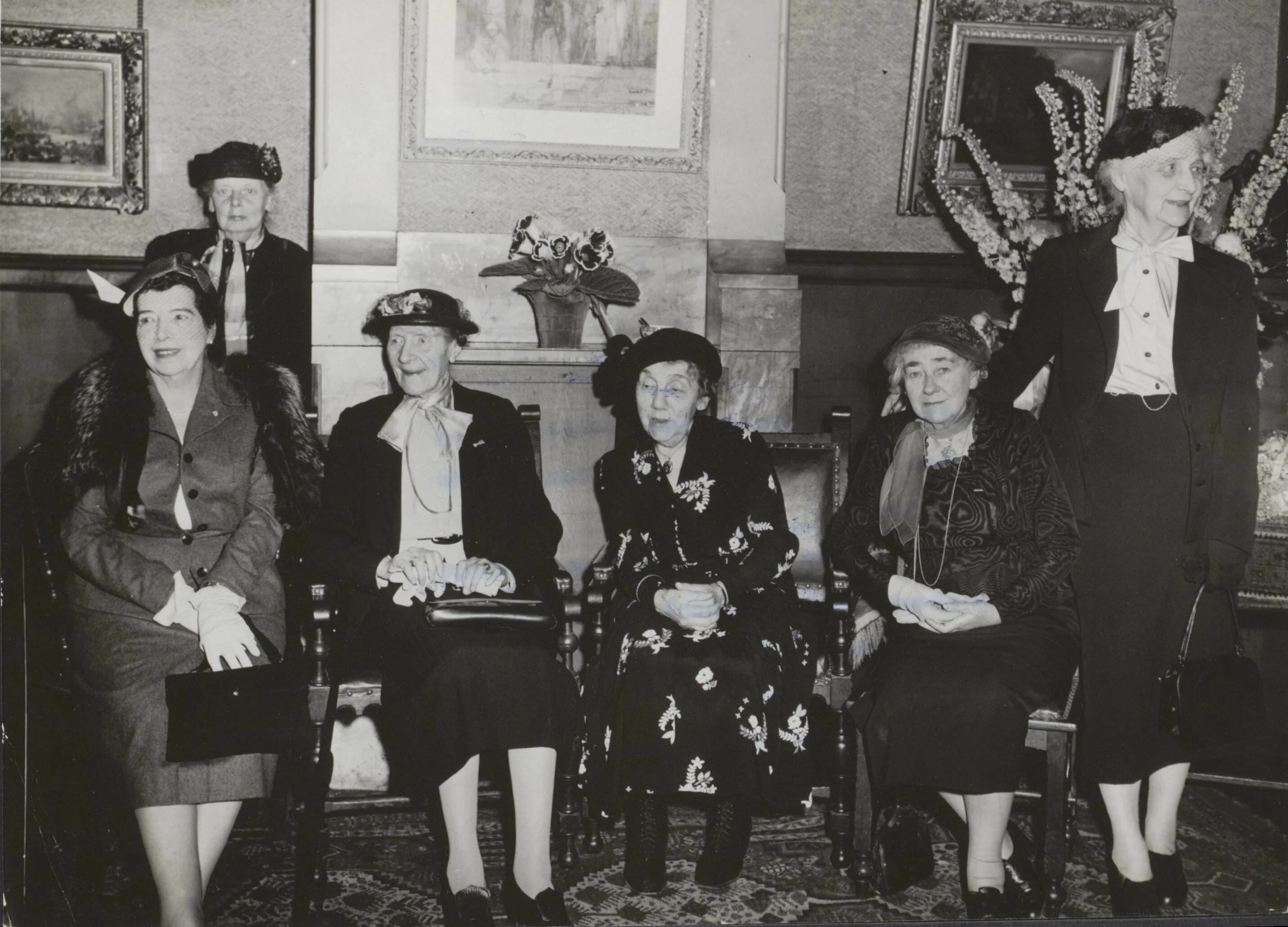
Birthday party of Coba Ritsema, 1956
Fast forward: by 1912, the critic Albert Plasschaert had a name for the circle of women artists she painted alongside: the Amsterdamsche Joffers — the Amsterdam young ladies. It sounds twee now, almost dismissive, and there's a reason for that (for instance, the recent retrospective Frans Hals museum dedicated to Coba opted to only mention this denomination in passing).
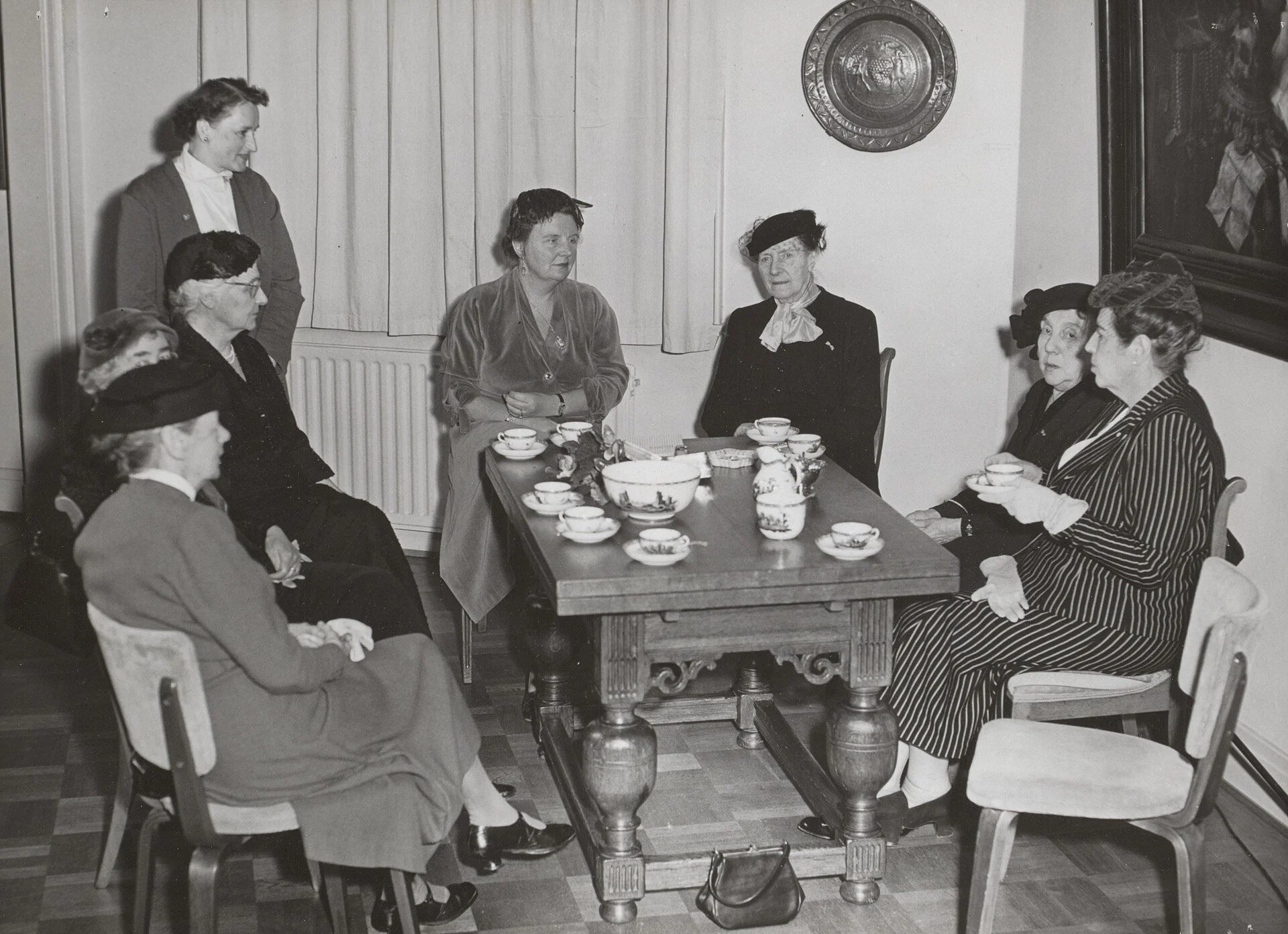
Queen Juliana and the ‘Amsterdamse Joffers’ in Gemeentemuseum Arnhem. From left to right: Coba Surie, Lizzy Ansingh, Jo Bauer, Jannet Cochius, koningin Juliana, Marie van Regteren Altena, Coba Ritsema en Betsy Westendorp
These were women from wealthy families who weren't expected to earn a living from their work, much like the nobility that Linda Nochlin mentioned as a demographic that had little chance of producing 'great female artists'. Going out into the world with an easel was considered inappropriate for them — so instead they painted what was in front of them: their own studios, their own interiors, tea with their aunts. The women from this group therefore mostly painted in their ateliers, and each of them had themes that they excelled in.
Here's where it gets uncomfortable, if you're hoping for a straightforward feminist icon. Ritsema was, by most accounts, not an explicit feminist. Despite coming of age during the Suffrage movement, Coba has distanced herself from the feminist call to arms. She painted flowers. She painted portraits of people she knew well and people who modelled for her. And when a critic wanted to praise her work in 1947, the compliment he reached for was that her paintings "could have been produced by a man" — and everyone involved, Ritsema included, seems to have understood that as high praise. So what do we do with Coba's lack of feminist dedication?
Granted that we bring that into our discussions of Coba Ritsema, I think it should not blemish the way we read her legacy. She was a brilliant painter with an unparalleled talent for colour. If even the digital reproductions of her paintings can still convey some of that talent, it is hard to dispute her contribution to the history of Dutch art. What is most relevant for her the ceilings she shattered at the turn of the 1900s, when women living of their art was still an uncommon trope. I don't see why she has to fit any bill of role model possible. She paved the way for girls and women to become professional painters in her own way – through following a safe, yet brilliant painting technique; to portray girls and compose still lives; and to remain unmarried and enjoy tea parties with her friends till the end of her life.
We will be discussing Coba Ritsema extensively during the workshop You Be The Judge. Women Artists: A Matter of Taste or Quality?
You can learn more here and register here.
